IP Camera system benefits.
Call for
Price +91-484-3206020
| Overview of IP Camera Systems |
|
IP cameras are CCTV cameras that transmit image data and control signals over
a fast Ethernet link using Internet Protocol. IP based camera also known IP
Network cameras digitizes the video signal using a specialized encoder that
contains an onboard web server. As a result of this, IP camera acts as a network
device thus allowing captured video images to be viewed not only through an
existing network but also through a web browser that can be accessed through the
Internet.

IP network cameras in combination with Digital Video Recorder or Network
Video Recorder can be converted into a video surveillance system. IP cameras
usually come with a Fast Ethernet interface. IP cameras is a fast growing branch
in CCTV and allows home owners and business men to view their cameras through
any internet connection through a computer or a 3G phone. The data is
transmitted across a packet-switched network using the Internet protocol suite
called TCP/IP.
IP cameras feature an Easy Connect Technology that allows a user even with
very less or no networking experience to setup an IP camera. IP-based video
cameras have an ability to transmit signals either wirelessly or through wired
connections such as Cat-5 cables and have an added benefit of being able to use
switches, hubs, and routers that allow the Cat-5 network to be expanded to much
broader ranges.
|
| Features of IP Camera Systems |
|
Reduced Cost
IP Network cameras use Cat 5
cables that are much shorter than those used with CCTV, as the Cat 5 cable runs
from the IP camera to a wiring closet used for the data network. The cable in
the wiring closet plugs into a data switch, which in turn connects via one wire
to the network. The cables runs from the IP Network camera to the switch are a
maximum of 300 feet but are normally much shorter.
IP Network cameras come with a general-purpose IP networking equipment
infrastructure which results in reduced system costs and added functionality. IP
Network cameras consume less space in large CCTV Setups as video switching and
routing is done via computer discarding the use of physically large and
expensive video matrix switchers
|
| Flexible image format
IP Network cameras support a variety of image resolutions such as standard
analog CCTV resolutions including CIF, PAL, NTSC and SECAM and megapixel
resolutions. It allows to digitally zoom high resolution megapixel mages. These
cameras work on a progressive scan mode which allows removal of better quality
still images from a video feed.
IP cameras do not require any additional video encoder hardware to convert
analog video signals into digital data in order to record onto hard drives.
These cameras allow you to choose video compression codec such as Motion MPEG,
MPEG-4 Part 2 and H.264.
|
| Extensible Network Infrastructure
IP Cameras come with an ability to use Power Over Ethernet which allows one
cable to handle power and data. IP Cameras deploys well with a wireless bridge
and have a ability use legacy coaxial cables with appropriate converters. IP
Cameras allows you to use fiber optic links with appropriate twisted pair to
fiber converters. These cameras transmit commands for PTZ cameras via a single
network cable.
|
| Enhanced Functionality
As IP Cameras can function on a wireless network, they can operate even when
they are placed just about anywhere. It facilitates automated alerting via email
or file transfer in response to video motion detection or dry-contact alarms.
These cameras prevent viewing images or altering the camera configuration by
unauthorized personnel with the password lockout facility. IP cameras feature
Remote configuration, diagnostics, and maintenance.
IP Cameras support
streaming media and compression formats to relieve transmission bandwidth and
data storage requirements. These cameras also support Video Analytics,
intelligent video motion detection with shape recognition and counting applied
to objects, people, and vehicles. IP cameras combine with DVRs and NVRs to form
a video surveillance system. Due to the ability to upgrade camera firmware over
the network, they allow future-proof installations with field-upgradeable
products.
|
|
Fixed Body IP
Cameras
Fixed Body IP cameras have a rectangular body and a
fixed viewing angle. They clearly show where they are pointing. Fixed Body IP
cameras are especially used at placed with relatively low risk of vandalism.
They are generally placed at such placed where visibility and the clear
direction of the camera would act as deterrents to undesirable activity.
Fixed Body IP cameras use a variety of exchangeable lenses which is one of
the benefits of using such cameras. The disadvantage of these cameras is that
they are relatively easy to tamper with.
|
|
Fixed Dome IP cameras are fixed cameras pre-installed in small dome-like
housing. The design of the cameras makes it difficult to see where these type of
cameras is pointing. Fixed Dome IP cameras are ideally used the uncertainty of
the viewing angle can deter potential wrongdoers.
Having the discreet, unobtrusive design with a clear or tinted dome, Fixed
Dome IP cameras can be mounted on walls or ceilings. One disadvantage of these
cameras is that they use only one type of lens.
|
|
PTZ IP Cameras
PTZ IP
cameras come with a standard or dome housing. PTZ IP cameras are ideal at places
where live monitoring is needed and/or it is necessary to track an individual
activity or an object’s movement. PTZ IP cameras have an ability to operate in
guard tour mode, allowing the camera to move between preset positions, and can
be controlled using joysticks.
PTZ IP cameras can also be used for outdoor or indoor installations with the
help of mounting kits. These cameras allow the lens be adjusted remotely to
capture different views from a single location. One disadvantage of these
cameras is that they are more expensive and can miss key
activity.
|
|
Wireless IP
Cameras
Wireless IP cameras feature an Internal webserver
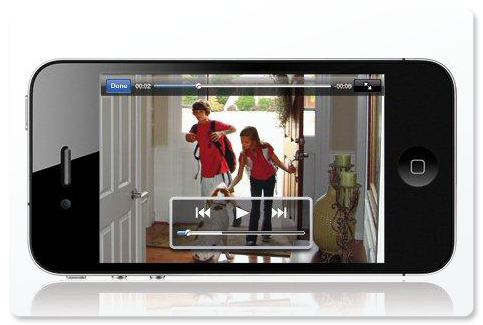
allows access from PC or 3G mobile phone. Some cameras feature on board video
recording via SD flash memory. Some also allow day/ night operations.
Wireless IP cameras allows high resolution wireless operation with
remote access. These cameras can be connected to 3G mobile phone. Wireless IP
cameras are ideal for use at home or office.
|
|




Comments
Post a Comment